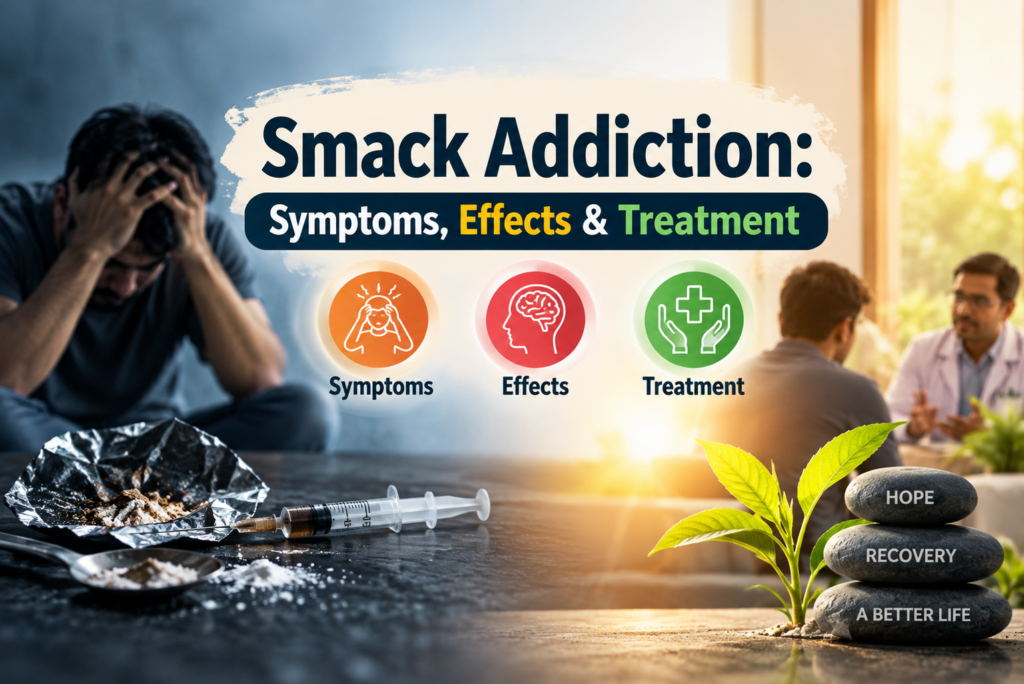
Smack addiction is a serious health condition that can affect a person’s physical health, mental well-being, family relationships, and daily life. Smack, commonly known as heroin, is a highly addictive opioid drug that can cause physical dependence, withdrawal symptoms, and life-threatening overdose.
People experiencing heroin addiction may find it difficult to stop using the drug without appropriate support. However, evidence-based treatment, medical care, counseling, and continued recovery support can help individuals work towards a healthier life.
At Indore Nasha Mukti Kendra, we encourage individuals and families to understand the risks of smack addiction and explore appropriate professional treatment options.
Smack is a street name for heroin, an opioid drug derived from morphine. It affects the brain and central nervous system, influencing pain perception, mood, alertness, and breathing.
Repeated use can lead to tolerance and physical dependence. A person may begin to experience strong cravings and difficulty controlling drug use, even when it negatively affects health, relationships, or everyday responsibilities.
Heroin use also carries a serious risk of overdose, particularly when combined with alcohol, sedatives, or other substances that slow breathing.
Smack addiction can develop through a combination of biological, psychological, and environmental factors. Some individuals may begin using drugs due to peer pressure, curiosity, stress, or exposure to substance use.
With repeated use, the brain adapts to the drug’s effects. A person may develop tolerance, experience cravings, and continue using heroin to avoid withdrawal symptoms.
Addiction is a health condition, not simply a lack of willpower. Recognizing the problem and seeking professional help are important steps towards recovery.
The signs of heroin addiction can differ from one individual to another. Some common warning signs include:
Strong and recurring cravings for heroin.
Difficulty reducing or stopping drug use.
Unusual drowsiness or reduced alertness.
Very small pupils.
Changes in appetite, sleep, or body weight.
Muscle and bone pain when the drug wears off.
Neglecting work, education, or family responsibilities.
Withdrawing from friends and social activities.
Continuing drug use despite harmful consequences.
These signs do not confirm addiction on their own. A qualified healthcare professional can assess the person’s condition and recommend appropriate care.
Repeated heroin use can contribute to constipation, sleep problems, poor general health, and other medical complications. Overdose can dangerously slow breathing and deprive the brain of oxygen.
People experiencing addiction may also struggle with anxiety, depression, emotional distress, or difficulties with concentration and decision-making. Mental health support may be an important part of treatment.
Addiction can create emotional stress, financial difficulties, misunderstandings, and loss of trust within families. Supportive communication and professional guidance can help families navigate these challenges.
Drug dependence may interfere with employment, education, financial stability, and social responsibilities. Seeking treatment can help individuals begin addressing these difficulties.
Sharing needles or injection equipment can increase the risk of HIV, hepatitis B, hepatitis C, and other infections. Medical assessment and appropriate preventive care are important.
When a person with opioid dependence stops using heroin, withdrawal symptoms may occur. The severity can vary depending on the person’s health, drug use history, and other circumstances.
Common symptoms may include:
Muscle and bone pain.
Restlessness and anxiety.
Sweating and chills.
Runny nose and watery eyes.
Difficulty sleeping.
Abdominal cramps, nausea, vomiting, or diarrhea.
Strong cravings for heroin.
Medical guidance can help individuals manage withdrawal symptoms and plan appropriate treatment.
Important: Do not attempt to treat opioid dependence with unprescribed medicines or unverified home remedies. Seek guidance from a qualified healthcare professional.
Effective treatment should be tailored to each person’s needs and may involve medical care, psychological support, and continued recovery planning.
A qualified healthcare professional can assess physical health, mental health, substance use patterns, withdrawal risks, and any additional medical concerns.
Some individuals need clinical supervision and appropriate medication to manage withdrawal symptoms. Withdrawal management alone is generally not sufficient treatment for opioid use disorder.
Evidence-based medications such as buprenorphine and methadone may be appropriate for treating opioid use disorder. Naltrexone may also be an option for selected individuals following medical assessment.
These medications must be used under qualified medical supervision.
Counseling can help individuals understand the triggers associated with drug use, manage cravings, develop coping skills, and work towards healthier behavioral patterns.
Family education and counseling can help loved ones understand addiction, improve communication, establish healthy boundaries, and support recovery.
Long-term recovery may involve follow-up appointments, ongoing counseling, support groups, healthy routines, and a personalized relapse-prevention plan.
A return to drug use does not mean recovery is impossible. It is an opportunity to review treatment needs and seek further professional support.
Family members can play a valuable role in encouraging treatment and supporting positive changes.
Speak with compassion and avoid blaming the individual.
Encourage professional medical assessment.
Learn about addiction and evidence-based treatment.
Avoid giving unprescribed medicines.
Support healthy daily routines and follow-up care.
Seek professional help for family members when needed.
Recovery is often more manageable when individuals have access to appropriate care and a supportive environment.
A heroin overdose is a medical emergency. Warning signs include very slow or stopped breathing, inability to wake the person, severe unresponsiveness, and blue or grey lips or skin.
If an overdose is suspected, call India’s emergency number 112 immediately. Use naloxone if available and follow emergency professionals’ instructions. Do not leave the person alone.
If you or someone you care about is experiencing heroin addiction, seeking appropriate professional support can be an important first step.
Indore Nasha Mukti Kendra aims to help individuals and families explore suitable addiction treatment and recovery options in Indore, Madhya Pradesh.
Depending on individual needs and available services, a treatment plan may include medical assessment, supervised withdrawal management, medication-based treatment, counseling, rehabilitation, and follow-up care.
Before selecting a rehabilitation centre, ask about qualified healthcare professionals, medical supervision, emergency arrangements, treatment methods, and aftercare services.
Smack addiction can affect every aspect of life, but appropriate treatment and continued support can help individuals move towards recovery.
Recognizing the warning signs, understanding the risks, and seeking professional care are important steps towards a healthier future.
If you or a loved one is struggling with heroin addiction, remember that asking for help is a positive step.
Contact Indore Nasha Mukti Kendra to learn about appropriate recovery options and take the first step towards a healthier, substance-free life.
